

Volume 28, Issue 1 (5-2025)
jha 2025, 28(1): 40-55 |
Back to browse issues page



Download citation:
BibTeX | RIS | EndNote | Medlars | ProCite | Reference Manager | RefWorks
Send citation to:


BibTeX | RIS | EndNote | Medlars | ProCite | Reference Manager | RefWorks
Send citation to:
Moallem E, Ghavami V, Moghri J, Marvi A, Najafi M, Tabatabaee S S. Medical Students’ Attitudes towards Artificial Intelligence and Educational Needs: A Cross-sectional Study. jha 2025; 28 (1) :40-55
URL: http://jha.iums.ac.ir/article-1-4660-en.html
URL: http://jha.iums.ac.ir/article-1-4660-en.html
Ehsan Moallem1 

 , Vahid Ghavami2 , Javad Moghri3 , Abolfazl Marvi4 , Mahboobe Najafi5 , Seyed saeed Tabatabaee6
, Vahid Ghavami2 , Javad Moghri3 , Abolfazl Marvi4 , Mahboobe Najafi5 , Seyed saeed Tabatabaee6
1- Student Research Committee, Mashhad University of Medical Sciences, Mashhad, Iran.
2- Department of Biostatistics, School of Health, Mashhad University of Medical Sciences, Mashhad, Iran.
3- Department of Management Sciences and Health Economics, School of Health, Mashhad University of Medical Sciences, Mashhad, Iran. & Social Determinants of Health Research Center, Mashhad University of Medical Sciences, Mashhad, Iran.
4- Student Research Committee, Mashhad University of Medical Sciences, Mashhad, Iran
5- Department of Public Health, School of Health, Torbat Heydarieh University of Medical Sciences, Torbat Heydarieh, Iran.
6- Department of Management Sciences and Health Economics, School of Health, Mashhad University of Medical Sciences, Mashhad, Iran. & Social Determinants of Health Research Center, Mashhad University of Medical Sciences, Mashhad, Iran. ,tabatabaees@mums.ac.ir
2- Department of Biostatistics, School of Health, Mashhad University of Medical Sciences, Mashhad, Iran.
3- Department of Management Sciences and Health Economics, School of Health, Mashhad University of Medical Sciences, Mashhad, Iran. & Social Determinants of Health Research Center, Mashhad University of Medical Sciences, Mashhad, Iran.
4- Student Research Committee, Mashhad University of Medical Sciences, Mashhad, Iran
5- Department of Public Health, School of Health, Torbat Heydarieh University of Medical Sciences, Torbat Heydarieh, Iran.
6- Department of Management Sciences and Health Economics, School of Health, Mashhad University of Medical Sciences, Mashhad, Iran. & Social Determinants of Health Research Center, Mashhad University of Medical Sciences, Mashhad, Iran. ,
Keywords: Artificial intelligence, Medical students, Medical education, Educational needs assessment, Attitude
Full-Text [PDF 1090 kb]
(1398 Downloads)
| Abstract (HTML) (3025 Views)
Table 2. Source and level of awareness of participants regarding AI
Table 3. The association of characteristics of participants with the attitude scores related to AI
Table 4. Items of the questionnaire with the most agreement (>70%) and disagreement (> 50%)
Full-Text: (397 Views)
Introduction
Artificial intelligence (AI) is regarded as the most revolutionary technology of the 21st century [1]. This technology is now being used in healthcare and has the potential to transform healthcare [2]. A study published in the Nature revealed that AI outperforms radiologists in detecting breast cancer through mammography [3]. Studies indicate that AI can help reduce diagnostic and treatment errors [4], alleviate staff workload, lower costs, and improve patients' quality of life [1]. However, while transformation brings broad benefits and advantages, it is rarely without side effects. Concerns and challenges also exist in the field of artificial intelligence, including threats to the confidentiality and security of health data, the deterioration of patient-doctor relationships, and an increase in physician unemployment rates [1,5,6]. Therefore, medical professionals, especially physicians, should leverage the advantages of artificial intelligence to adopt appropriate approaches in response to its challenges and risks [7]. However, evidence indicates that the current medical education system does not prepare future physicians for the AI revolution in healthcare [8] and updating medical curricula to include AI related topics and its applications in healthcare is essential [6,9,10]. Consequently, the World Medical Association and the Standing Committee of European Physicians advocate for the revision of medical curricula and incorporating AI into medical education, residency training, and continuous medical education programs [6].
To develop effective artificial intelligence curriculum, examining medical students' attitudes and perceptions regarding the role of AI in medicine, along with its benefits and risks, is the first important step [11]. Accordingly, studies have been conducted in countries such as the United States [12-14], the United Kingdom [15], Australia [16], Turkey [6], Iraq [17], Lebanon [18,19], Taiwan [20], Saudi Arabia [21], Egypt [22], Palestine [23], and others. In Iran, two studies have been conducted to assess the awareness, readiness, and attitudes of medical students at Babol, and Mazandaran University of Medical Sciences towards AI, which indicate a generally positive attitude. These studies have emphasized the importance of AI education [24,25]. However, an educational needs assessment from students' perspectives has not been the objective of these studies. Therefore, this study was conducted to address this knowledge gap, aiming to examine the attitudes of medical students at Mashhad University of Medical Sciences (MUMS) towards AI and assess their educational needs. This study will aid in the development and updating of medical curricula and training programs aligned with advancements in
artificial intelligence.
Methods
Artificial intelligence (AI) is regarded as the most revolutionary technology of the 21st century [1]. This technology is now being used in healthcare and has the potential to transform healthcare [2]. A study published in the Nature revealed that AI outperforms radiologists in detecting breast cancer through mammography [3]. Studies indicate that AI can help reduce diagnostic and treatment errors [4], alleviate staff workload, lower costs, and improve patients' quality of life [1]. However, while transformation brings broad benefits and advantages, it is rarely without side effects. Concerns and challenges also exist in the field of artificial intelligence, including threats to the confidentiality and security of health data, the deterioration of patient-doctor relationships, and an increase in physician unemployment rates [1,5,6]. Therefore, medical professionals, especially physicians, should leverage the advantages of artificial intelligence to adopt appropriate approaches in response to its challenges and risks [7]. However, evidence indicates that the current medical education system does not prepare future physicians for the AI revolution in healthcare [8] and updating medical curricula to include AI related topics and its applications in healthcare is essential [6,9,10]. Consequently, the World Medical Association and the Standing Committee of European Physicians advocate for the revision of medical curricula and incorporating AI into medical education, residency training, and continuous medical education programs [6].
To develop effective artificial intelligence curriculum, examining medical students' attitudes and perceptions regarding the role of AI in medicine, along with its benefits and risks, is the first important step [11]. Accordingly, studies have been conducted in countries such as the United States [12-14], the United Kingdom [15], Australia [16], Turkey [6], Iraq [17], Lebanon [18,19], Taiwan [20], Saudi Arabia [21], Egypt [22], Palestine [23], and others. In Iran, two studies have been conducted to assess the awareness, readiness, and attitudes of medical students at Babol, and Mazandaran University of Medical Sciences towards AI, which indicate a generally positive attitude. These studies have emphasized the importance of AI education [24,25]. However, an educational needs assessment from students' perspectives has not been the objective of these studies. Therefore, this study was conducted to address this knowledge gap, aiming to examine the attitudes of medical students at Mashhad University of Medical Sciences (MUMS) towards AI and assess their educational needs. This study will aid in the development and updating of medical curricula and training programs aligned with advancements in
artificial intelligence.
Methods
Study design: This cross-sectional and descriptive-analytical study was conducted at Mashhad University of Medical Sciences (MUMS) in 2024.
Study population and sample: The study population included all medical students at MUMS, including those in general and specialty (residency) programs. The inclusion criteria required participants to be enrolled in general or specialty medical programs at MUMS during the academic year 2023-2024. Students were excluded from the study if they were unwilling to participate, did not consent, or incompletely completed the questionnaire.
The students were selected through a convenience sampling method, and the sample size was calculated based on Morgan's table, indicating that a sample of 246 individuals was appropriate given the overall population of 3,438.
Data collection instrument: To collect data, the standard questionnaire developed by Civaner et al. [6] was applied. This questionnaire was first independently translated into Persian by two proficient translators, whose translations were then reconciled. The final translation was subsequently retranslated into English by an independent translator, who verified it against the original version to ensure consistency and accuracy.
The initial questionnaire was subsequently distributed to expert professors and specialists in the fields of medicine, medical education, medical informatics, health services management, and health policy. They were asked to provide their written opinions regarding content coverage, grammar adherence, appropriate phrasing, and suitable arrangment of items. Through this process, the face and content validity of the questionnaire were confirmed. To verify its reliability, a test-retest was conducted on 30 individuals from the target population with a two-week interval. The Intraclass Correlation Coefficient (ICC) was 0.82 (95% CI: 0.75- 0.88). To assure Internet consistency, Cronbach's alpha coefficient was used, resulting in 0.84, indicating the good reliability of the questionnaire.
The final questionnaire consisted of five sections. The first section introduced the research and its objectives; the second section covered demographic information; the third section assessed students’ educational experiences in artificial intelligence (one item) and their self-assessment of AI awareness (one item); the fourth section evaluated students’ attitudes towards the potential impacts of artificial intelligence (18 items); the fifth section collected opinions on AI- related topics perceived necessary in medical education (16 items). The questionnaire ended with optional fileds for participants’ email addresses, and their suggestions and comments.
The items related to the evaluation of attitudes were scored based on a 5-point Likert scale (ranging from strongly disagree to strongly agree). To report the attitude as a percentage, the scores were calculated out of 100.The needs assessment of educational topics was quantified using a 5-point Likert scale (ranging from not be included at all to must be included).
Data collection procedure: The final questionnaire was created using Google Forms and distributed to students through social media networks as well as university email system. Additionally, to reach the minimum sample size (246 people), two members of the research team visited the Faculty of Medicine and teaching hospitals, directly providing the questionnaires to students. To prevent students from completing duplicate questionnaires, they were informed when the questionnaire was delivered, the study objectives were explained to them, and they were asked to inform the team if they had already completed it. For electronically completed questionnaires, system information (IP address) through which the data was submitted was checked. Data collection took place from June to October 2024, with necessary notifications made to ensure maximum participation from students, while addressing any questions or ambiguities regarding the completion process. It was also ensured that the questionnaire was anonymous and that participants' information would remain confidential.
Data analysis: For data analysis, measures of central tendency and dispersion such as mean, standard deviation, frequency, and percentage were reported. Given the normality of the data, an independent t-test was employed to examine attitudes for two-level variables (such as gender), and one-way ANOVA was used for variables with more than two levels (such as academic year). All statistical analyses were conducted at a significance level of 0.05 using SPSS version 26.
Results
The initial questionnaire was subsequently distributed to expert professors and specialists in the fields of medicine, medical education, medical informatics, health services management, and health policy. They were asked to provide their written opinions regarding content coverage, grammar adherence, appropriate phrasing, and suitable arrangment of items. Through this process, the face and content validity of the questionnaire were confirmed. To verify its reliability, a test-retest was conducted on 30 individuals from the target population with a two-week interval. The Intraclass Correlation Coefficient (ICC) was 0.82 (95% CI: 0.75- 0.88). To assure Internet consistency, Cronbach's alpha coefficient was used, resulting in 0.84, indicating the good reliability of the questionnaire.
The final questionnaire consisted of five sections. The first section introduced the research and its objectives; the second section covered demographic information; the third section assessed students’ educational experiences in artificial intelligence (one item) and their self-assessment of AI awareness (one item); the fourth section evaluated students’ attitudes towards the potential impacts of artificial intelligence (18 items); the fifth section collected opinions on AI- related topics perceived necessary in medical education (16 items). The questionnaire ended with optional fileds for participants’ email addresses, and their suggestions and comments.
The items related to the evaluation of attitudes were scored based on a 5-point Likert scale (ranging from strongly disagree to strongly agree). To report the attitude as a percentage, the scores were calculated out of 100.The needs assessment of educational topics was quantified using a 5-point Likert scale (ranging from not be included at all to must be included).
Data collection procedure: The final questionnaire was created using Google Forms and distributed to students through social media networks as well as university email system. Additionally, to reach the minimum sample size (246 people), two members of the research team visited the Faculty of Medicine and teaching hospitals, directly providing the questionnaires to students. To prevent students from completing duplicate questionnaires, they were informed when the questionnaire was delivered, the study objectives were explained to them, and they were asked to inform the team if they had already completed it. For electronically completed questionnaires, system information (IP address) through which the data was submitted was checked. Data collection took place from June to October 2024, with necessary notifications made to ensure maximum participation from students, while addressing any questions or ambiguities regarding the completion process. It was also ensured that the questionnaire was anonymous and that participants' information would remain confidential.
Data analysis: For data analysis, measures of central tendency and dispersion such as mean, standard deviation, frequency, and percentage were reported. Given the normality of the data, an independent t-test was employed to examine attitudes for two-level variables (such as gender), and one-way ANOVA was used for variables with more than two levels (such as academic year). All statistical analyses were conducted at a significance level of 0.05 using SPSS version 26.
Results
Demographic characteristics: The questionnaire was administered to 251 medical students, the majority of whom were male (69%), under 25 years of age (76%), and enrolled in general medicine (93%). Further demographic details can be found in Table 1.
Table 1. Demographic characteristics of the medical students surveyed in the study (n = 251)
| Variable | Frequency | Percentage | |
| Age (years) | ≤25 | 192 | 76 |
| >25 | 59 | 24 | |
| Gender | Male | 173 | 69 |
| Female | 78 | 31 | |
| Nationality | Iranian | 240 | 96 |
| Non-Iranian | 11 | 4 | |
| Educational level | General | 233 | 93 |
| Specialized | 18 | 7 | |
| Year of Study | 1st | 18 | 7 |
| 2nd | 29 | 12 | |
| 3rd | 18 | 7 | |
| 4th | 65 | 26 | |
| 5th | 60 | 24 | |
| 6th | 28 | 11 | |
| ≥ 7th | 33 | 13 | |
Source of AI awareness and perceptions: Most students (76%) reported that they have received no training in artificial intelligence. Other students cited seminars and conferences as their primary sources of education. Ninety-four percent of students rated their awareness level as low or very low (Table 2).
Table 2. Source and level of awareness of participants regarding AI
| Variables | Frequency | Percentage | |
| Source of awareness | No education | 192 | 76 |
| Optional course | 14 | 6 | |
| Seminar or conference | 22 | 9 | |
| Obligational course | 0 | 0 | |
| Online | 18 | 7 | |
| Other | 5 | 2 | |
| Level of awareness | I have not heard anything about AI. | 8 | 3 |
| I have heard about AI, but I do not know what it is. | 47 | 19 | |
| Low knowledge | 181 | 72 | |
| Full knowledge | 14 | 6 | |
| Professional knowledge | 1 | 0 | |
Students' attitudes towards the possible impacts of artificial intelligence on medicine: Most students had a positive attitude towards artificial intelligence (72.8±8.7 out of 100). The attitude scores between the students in general and specialty programs were statistically significant (P=0.002). However, no significant differences were observed between female and male students, those under 25 years old and over 25 years old, or Iranian and non-Iranian students (Table 3).
Table 3. The association of characteristics of participants with the attitude scores related to AI
| Variables | Mean ± SD | Result | |
| Age | ≤25 | 72.73±8.77 | t*= -0.44 |
| >25 | 73.31±8.94 | P=0.660 | |
| Gender | Male | 72.15±8.92 | t= -1.94 |
| Female | 74.47±8.34 | P=0.053 | |
| Nationality | Iranian | 73.03±8.46 | t= 0.851 |
| Non-Iranian | 69.29±14.47 | P=0.414 | |
| Educational level | General | 72.40±8.46 | t= -3.094 |
| Specialty | 78.95±10.90 | P=0.002 | |
| Year of study | 1st | 70.06±8.40 | F**=1.09 P=0.369 |
| 2nd | 73.48±10.70 | ||
| 3rd | 73.88±6.89 | ||
| 4th | 71.77±10.24 | ||
| 5th | 72.33±7.49 | ||
| 6th | 75.23±7.44 | ||
| ≥ 7th | 74.44±8.79 | ||
| Source of awareness | No education | 72.14±9.01 | F=2.58 P=0.054 |
| Optional course | 75.15±6.35 | ||
| Seminar or conference | 75.15±9.11 | ||
| Obligational course | - | ||
| Online | 77.46±4.32 | ||
* Two-Independent Samples T-test
** One-Way ANOVA
** One-Way ANOVA
The majority of students (65%) believed that AI would influence their choice of specialty or subspecialty programs. A vast majority of respondents (94.4%) believed that AI would facilitate physicians’ access to information. However, 73.7% stated that AI diminished the value of the medical profession (Table 4).
Table 4. Items of the questionnaire with the most agreement (>70%) and disagreement (> 50%)
| Items | Disagree | Not sure | Agree |
| AI facilitates physicians’ access to information. | 3.2 | 2.4 | 94.4 |
| AI enables physicians to make more accurate decisions. | 4.4 | 6.8 | 88.8 |
| I think that with the widespread use of AI applications, I will become a better doctor. | 2.4 | 10 | 87.6 |
| Artificial intelligence cannot replace a doctor, but it can assist them. | 8.4 | 5.2 | 86.5 |
| Artificial intelligence facilitates patient education. | 2.8 | 13.1 | 84.1 |
| AI facilitates patients’ access to the services. | 8.4 | 8.4 | 83.3 |
| AI reduces errors in healthcare provision (such as medical errors). | 10.8 | 9.6 | 79.7 |
| AI devalues the medical profession. | 14.3 | 12 | 73.7 |
| AI damages patient- physician trust. | 52.2 | 24.7 | 23.1 |
| I think I am currently qualified enough to inform patients about the limitations and risks of AI programs and applications. | 53.8 | 27.5 | 18.7 |
"Strongly disagree" and "Disagree" have been merged into "Disagree" and "Agree" and "Strongly agree" have been merged into "Agree".
Students' educational needs regarding AI: Knowledge and skills related to artificial intelligence applications received the highest priority among participating students (91.2%). AI in scientific research (89.2%) and AI applications for reducing medical errors (88.8%) were the next highest priorities for students. Figure 1 shows the topics with that more than 70% agreement among students.
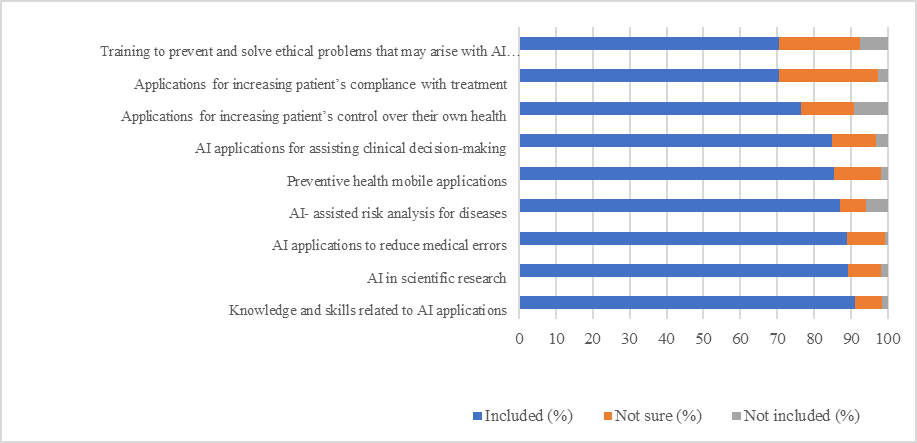
Figure 1. Most favorable AI-related topics to be included in medical education "Definitely should be included" and "It would be good to include it" have been merged into "Included" and "Should not be included" and "Not to be included at all" have been merged into "Not included".
Figure 1. Most favorable AI-related topics to be included in medical education "Definitely should be included" and "It would be good to include it" have been merged into "Included" and "Should not be included" and "Not to be included at all" have been merged into "Not included".
Discussion
This study examined the awareness and attitudes of medical students at Mashhad University of Medical Sciences regarding artificial intelligence and its potential impact on medicine. Additionally, an educational needs assessment regarding AI was conducted.
Students' awareness of AI: A significant portion of the students (94%) reported having a low level of awareness. Similarly, a systematic review by Mousavi Baigi et al. [26] concluded that most healthcare students possess limited knowledge and skills related to AI. These findings are consistent with an international study by Chen et al. [27] which indicated that more than half of medical students lack basic knowledge of AI. Therefore, it seems that the level of awareness of medical students regarding AI is low. This issue can be attributed to the greater focus of the medical curricula and education on clinical knowledge and skills, which prevent students from finding the necessary opportunities to acquire knowledge and skills in other areas.
Sources of awareness related to AI: A significant portion of the students (76%) reported that they had not undergone any training related to AI. This result somewhat aligns with the findings of the Allam et al [28] which showed that more than 92% of medical students in Arab countries had no formal training in AI. In the current research, students who had received training in AI primarily cited seminars and conferences (9%), online education (7%), and optional courses (6%) as their main sources of information. A US study conducted in 2021 found that the majority of participants (72%) had gained awareness about AI through media and social networks [13]. However, Park et al. [8] cautioned against passive acquisition of information about artificial intelligence from media and the Internet and emphasized the need to empower medical students to distinguish correct information from advertisements and false news. In conclusion, considering the limited awareness, knowledge, and skills of medical students in AI, along with insufficient formal training, and the presence of false news and misinformation in media and the internet, medical schools and universities should play a more active role in educating students about this emerging technology to ensure that future physicians effectively utilize it in diagnosis, treatment, and disease management.
Students' attitude towards AI: 72.5% of students had a positive attitude towards artificial intelligence. This finding is consistent with other studies; for example, a review study by Amiri et al. [29] showed that 65% of students had a positive attitude towards artificial intelligence. In a study conducted in Sudan, nearly 80% of medical students believed that artificial intelligence was essential in medicine [30]. These findings contrast with the results Allam et al. study [22], in Egypt, which reported that most students held negative views about AI and expressed concerns regarding its clinical applications.
The majority of participating students in our study (88.8%) believed that AI would facilitate physicians' access to information. This aspect was also identified as one of the main benefits of AI by medical students in the study by Civaner et al. [6]. Additionally, students believed that AI enables doctors to make more accurate decisions and reduces errors, which was also mentioned as an advantage of AI in medicine in the study by Derakhshanian et al. [31].
Most students (65%) thought that AI makes an impact on their choice of specialty for their residency and fellowship. A study conducted in the United States also showed that AI impacts on some specialties, such as radiology, and their job market is a major concern for students [14]. In contrast, two studies carried out in Lebanon and Turkey found that less than 30% of participating students stated that their choice of specialty would be influenced by how AI is used in that field [6,18]. Therefore, given the emergence of AI technology and its influence on certain specialties and the relatively high concern among Iranian students, it is necessary to formulate appropriate policies and plans that promote justice in training, distribution, and access to specialists in various fields.
Risks and limitations of AI from medical students’ viewpoint: The majority of students (86.5%) believed that AI cannot replace physicians but can assist them. This finding aligns with other studies. For example, the international study by Bisdas et al. [9] indicates that most medical students consider artificial intelligence as a partner rather than a competitor. Santos et al. [32] also showed that, contrary to some media narratives, most medical students view AI as a tool that can help them rather than replace them. In our study, more than half (52%) of the students mentioned that the disruption of the patient-physician relationship is one of the side effects of AI in medicine. This issue has also been identified as a major challenge in other studies [6,33]. Therefore, measures should be implemented to ensure that AI is regarded as an opportunity to strengthen the patient-physician relationship and enhance their interaction.
Curriculum restructuring in response to AI advancements: This study demonstrated that “knowledge and skills about AI applications” was regarded as the highest educational priority (91.2%). This aligns with Civaner et al. study [6], where the abovementioned topic was considered the most important by 96.2% of the students. The use of artificial intelligence in scientific research (89.2%) and AI applications to reduce medical errors (88.8%) were the next two priorities for students. In a systematic review study conducted by Pupic et al. [34], topics such as knowledge and skills related to AI, ethical issues, and the use of artificial intelligence in clinical decision-making were considered important educational topics that partly align with our findings. The similarities and differences between the findings of these studies can be attributed to the questionnaires used and variations in the knowledge levels of the students due to contextual differences across countries. Consequently, the findings of this study suggest that medical students in Iran require education in the technical, practical, and ethical dimensions of AI to achieve a thorough understanding and effectively utilize AI tools for disease prevention, diagnosis, and treatment while appropriately addressing patient concerns.
Limitations
Although this study was conducted at a major university, it was a single-center study. Therefore, its findings may not be generalizable to other medical universities. It is suggested that similar studies should be conducted at other universities, gatherering feedback from medical students, healthcare professionals, and educational experts to evaluate and enhance medical curricula. Since the participants completed the questionnaire voluntarily and with personal consent, it is possible that the responses were more likely to be provided by students interested in AI.
Conclusion
Despite their limited understanding and insufficient training in AI, medical students have a positive attitude regarding AI. As future healthcare professionals, they need to address concerns, uncertainties, and inquiries from patients and the public regarding AI in medicine effectively. Students express a strong desire to expand their understanding of AI; however, they face the challenge of misinformation about AI circulating in media and social networks. Therefore, integrating AI topics into both curricular and extracurricular activities is essential. This can be achieved by offering optional courses focused on artificial intelligence as well as informal training opportunities such as conferences, seminars, and congresses. To educate students effectively, it is important to utilize multidisciplinary training teams that include clinical experts, computer scientists, medical informatics specialists, engineers, and other related professionals.
Declarations
Ethical considerations: This study was ethically approved by the Medical Research and Ethics Committee of Mashhad University of Medical Sciences (No: IR.MUMS.REC.1402.332). The survey respondents provided their consent to participate.
Funding: This research was financially supported by Mashhad University of Medical Sciences (Project Code: 4020482). The funder had no role in data collection, analysis and manuscript preparation.
Conflicts of interests: The authors report no conflicts of interest.
Authors’ contributions: EM: Study design, data curation, data analysis, writing- original draft; VGH: Methodology, data analysis; JM: Conceptualization, writing– review & editing, final approval; AM: Data
Students' attitude towards AI: 72.5% of students had a positive attitude towards artificial intelligence. This finding is consistent with other studies; for example, a review study by Amiri et al. [29] showed that 65% of students had a positive attitude towards artificial intelligence. In a study conducted in Sudan, nearly 80% of medical students believed that artificial intelligence was essential in medicine [30]. These findings contrast with the results Allam et al. study [22], in Egypt, which reported that most students held negative views about AI and expressed concerns regarding its clinical applications.
The majority of participating students in our study (88.8%) believed that AI would facilitate physicians' access to information. This aspect was also identified as one of the main benefits of AI by medical students in the study by Civaner et al. [6]. Additionally, students believed that AI enables doctors to make more accurate decisions and reduces errors, which was also mentioned as an advantage of AI in medicine in the study by Derakhshanian et al. [31].
Most students (65%) thought that AI makes an impact on their choice of specialty for their residency and fellowship. A study conducted in the United States also showed that AI impacts on some specialties, such as radiology, and their job market is a major concern for students [14]. In contrast, two studies carried out in Lebanon and Turkey found that less than 30% of participating students stated that their choice of specialty would be influenced by how AI is used in that field [6,18]. Therefore, given the emergence of AI technology and its influence on certain specialties and the relatively high concern among Iranian students, it is necessary to formulate appropriate policies and plans that promote justice in training, distribution, and access to specialists in various fields.
Risks and limitations of AI from medical students’ viewpoint: The majority of students (86.5%) believed that AI cannot replace physicians but can assist them. This finding aligns with other studies. For example, the international study by Bisdas et al. [9] indicates that most medical students consider artificial intelligence as a partner rather than a competitor. Santos et al. [32] also showed that, contrary to some media narratives, most medical students view AI as a tool that can help them rather than replace them. In our study, more than half (52%) of the students mentioned that the disruption of the patient-physician relationship is one of the side effects of AI in medicine. This issue has also been identified as a major challenge in other studies [6,33]. Therefore, measures should be implemented to ensure that AI is regarded as an opportunity to strengthen the patient-physician relationship and enhance their interaction.
Curriculum restructuring in response to AI advancements: This study demonstrated that “knowledge and skills about AI applications” was regarded as the highest educational priority (91.2%). This aligns with Civaner et al. study [6], where the abovementioned topic was considered the most important by 96.2% of the students. The use of artificial intelligence in scientific research (89.2%) and AI applications to reduce medical errors (88.8%) were the next two priorities for students. In a systematic review study conducted by Pupic et al. [34], topics such as knowledge and skills related to AI, ethical issues, and the use of artificial intelligence in clinical decision-making were considered important educational topics that partly align with our findings. The similarities and differences between the findings of these studies can be attributed to the questionnaires used and variations in the knowledge levels of the students due to contextual differences across countries. Consequently, the findings of this study suggest that medical students in Iran require education in the technical, practical, and ethical dimensions of AI to achieve a thorough understanding and effectively utilize AI tools for disease prevention, diagnosis, and treatment while appropriately addressing patient concerns.
Limitations
Although this study was conducted at a major university, it was a single-center study. Therefore, its findings may not be generalizable to other medical universities. It is suggested that similar studies should be conducted at other universities, gatherering feedback from medical students, healthcare professionals, and educational experts to evaluate and enhance medical curricula. Since the participants completed the questionnaire voluntarily and with personal consent, it is possible that the responses were more likely to be provided by students interested in AI.
Conclusion
Despite their limited understanding and insufficient training in AI, medical students have a positive attitude regarding AI. As future healthcare professionals, they need to address concerns, uncertainties, and inquiries from patients and the public regarding AI in medicine effectively. Students express a strong desire to expand their understanding of AI; however, they face the challenge of misinformation about AI circulating in media and social networks. Therefore, integrating AI topics into both curricular and extracurricular activities is essential. This can be achieved by offering optional courses focused on artificial intelligence as well as informal training opportunities such as conferences, seminars, and congresses. To educate students effectively, it is important to utilize multidisciplinary training teams that include clinical experts, computer scientists, medical informatics specialists, engineers, and other related professionals.
Declarations
Ethical considerations: This study was ethically approved by the Medical Research and Ethics Committee of Mashhad University of Medical Sciences (No: IR.MUMS.REC.1402.332). The survey respondents provided their consent to participate.
Funding: This research was financially supported by Mashhad University of Medical Sciences (Project Code: 4020482). The funder had no role in data collection, analysis and manuscript preparation.
Conflicts of interests: The authors report no conflicts of interest.
Authors’ contributions: EM: Study design, data curation, data analysis, writing- original draft; VGH: Methodology, data analysis; JM: Conceptualization, writing– review & editing, final approval; AM: Data
curation; MN: Data management, visualization, writing- original draft; SST: Project administration, writing– review & editing, final approval. The final version has been reviewed and approved by all authors.
Consent for publication: Not applicable.
Data availability: The dataset can be requested from corresponding author based on a reasonable request.
AI declaration: The English part of the manuscript was edited using editing service of Springer Nature and Sider Fusion AI tools. These revisions were thoroughly reviewed and approved by the authors to ensure appropriateness and authenticity.
Acknowledgments: This research was supported financially by Mashhad University of Medical Sciences. The research team would like to thank everyone who collaborated in the research process, especially the students who completed the questionnaires and sent them to others.
Consent for publication: Not applicable.
Data availability: The dataset can be requested from corresponding author based on a reasonable request.
AI declaration: The English part of the manuscript was edited using editing service of Springer Nature and Sider Fusion AI tools. These revisions were thoroughly reviewed and approved by the authors to ensure appropriateness and authenticity.
Acknowledgments: This research was supported financially by Mashhad University of Medical Sciences. The research team would like to thank everyone who collaborated in the research process, especially the students who completed the questionnaires and sent them to others.
Type of Study: Research |
Subject:
Health Policy
Received: 2025/02/2 | Accepted: 2025/07/27 | Published: 2025/09/3
Received: 2025/02/2 | Accepted: 2025/07/27 | Published: 2025/09/3
Supplement [PDF 743 KB] (137 Download)
References
1. Schönberger D. Artificial intelligence in healthcare: a critical analysis of the legal and ethical implications. International Journal of Law and Information Technology. 2019;27(2):171-203. [DOI:10.1093/ijlit/eaz004]
2. Lai MC, Brian M, Mamzer MF. Perceptions of artificial intelligence in healthcare: findings from a qualitative survey study among actors in France. Journal of Translational Medicine. 2020;18(1):14. [DOI:10.1186/s12967-019-02204-y]
3. McKinney SM, Sieniek M, Godbole V, Godwin J, Antropova N, Ashrafian H, et al. International evaluation of an AI system for breast cancer screening. Nature. 2020;577(7788):89-94. [DOI:10.1038/s41586-019-1799-6]
4. Jiang F, Jiang Y, Zhi H, Dong Y, Li H, Ma S, et al. Artificial intelligence in healthcare: past, present and future. Stroke and Vascular Neurology. 2017;2(4):230-243. [DOI:10.1136/svn-2017-000101]
5. Aung YY, Wong DC, Ting DS. The promise of artificial intelligence: a review of the opportunities and challenges of artificial intelligence in healthcare. British Medical Bulletin. 2021;139(1):4-15. [DOI:10.1093/bmb/ldab016]
6. Civaner MM, Uncu Y, Bulut F, Chalil EG, Tatli A. Artificial intelligence in medical education: a cross-sectional needs assessment. BMC Medical Education. 2022;22(1):772. [DOI:10.1186/s12909-022-03852-3]
7. McCoy LG, Nagaraj S, Morgado F, Harish V, Das S, Celi LA. What do medical students actually need to know about artificial intelligence? NPJ Digital Medicine. 2020;3(1):86. [DOI:10.1038/s41746-020-0294-7]
8. Park SH, Do KH, Kim S, Park JH, Lim YS. What should medical students know about artificial intelligence in medicine? Journal of Educational Evaluation for Health Professions. 2019;16:18. [DOI:10.3352/jeehp.2019.16.18]
9. Bisdas S, Topriceanu CC, Zakrzewska Z, Irimia AV, Shakallis L, Subhash J, et al. Artificial intelligence in medicine: a multinational multi-center survey on the medical and dental students' perception. Frontiers in Public Health. 2021;9:795284. [DOI:10.3389/fpubh.2021.795284]
10. Kimiafar K, Sarbaz M, Tabatabaei SM, Ghaddaripouri K, Mousavi AS, Mehneh MR, et al. Artificial intelligence literacy among healthcare professionals and students: a systematic review. Frontiers in Health Informatics. 2023;12:168. [DOI:10.30699/fhi.v12i0.524]
11. Imran N, Jawaid M. Artificial intelligence in medical education: are we ready for it? Pakistan Journal of Medical Sciences. 2020;36(5):857. [DOI:10.12669/pjms.36.5.3042]
12. Liu DS, Sawyer J, Luna A, Aoun J, Wang J, Boachie L, et al. Perceptions of US medical students on artificial intelligence in medicine: mixed methods survey study. JMIR Medical Education. 2022;8(4):e38325. [DOI:10.2196/38325]
13. Wood EA, Ange BL, Miller DD. Are we ready to integrate artificial intelligence literacy into medical school curriculum: students and faculty survey. Journal of Medical Education and Curricular Development. 2021;8:23821205211024078. [DOI:10.1177/23821205211024078]
14. Park CJ, Yi PH, Siegel EL. Medical student perspectives on the impact of artificial intelligence on the practice of medicine. Current Problems in Diagnostic Radiology. 2021;50(5):614-619. [DOI:10.1067/j.cpradiol.2020.06.011]
15. Sit C, Srinivasan R, Amlani A, Muthuswamy K, Azam A, Monzon L, et al. Attitudes and perceptions of UK medical students towards artificial intelligence and radiology: a multicentre survey. Insights into Imaging. 2020;11(1):14. [DOI:10.1186/s13244-019-0830-7]
16. Stewart J, Lu J, Gahungu N, Goudie A, Fegan PG, Bennamoun M, et al. Western Australian medical students' attitudes towards artificial intelligence in healthcare. PLoS One. 2023;18(8):e0290642. [DOI:10.1371/journal.pone.0290642]
17. Hawezy DJ, Mahmood KA, Hawezy GA, Sadraldeen GS, Ahmad ST. Medical students' perception toward using AI in medical education in the Kurdistan Region, Iraq: a cross-sectional study. Cureus. 2024;16(9):e70545. [DOI:10.7759/cureus.70545]
18. Doumat G, Daher D, Ghanem NN, Khater B. Knowledge and attitudes of medical students in Lebanon toward artificial intelligence: a national survey study. Frontiers in Artificial Intelligence. 2022;5:1015418. [DOI:10.3389/frai.2022.1015418]
19. Daher OA, Dabbousi AA, Chamroukh R, Saab AY, Al Ayoubi AR, Salameh P. Artificial intelligence: knowledge and attitude among lebanese medical students. Cureus. 2024;16(1):e51466. [DOI:10.7759/cureus.51466]
20. Angkurawaranon S, Inmutto N, Bannangkoon K, Wonghan S, Kham-Ai T, Khumma P, et al. Attitudes and perceptions of Thai medical students regarding artificial intelligence in radiology and medicine. BMC Medical Education. 2024;24(1):1188. [DOI:10.1186/s12909-024-06150-2]
21. Alwadani FAS, Lone A, Hakami MT, Moria AH, Alamer W, Alghirash RA, et al. Attitude and understanding of artificial intelligence among Saudi medical students: an online cross-sectional study. Journal of Multidisciplinary Healthcare. 2024;17:1887-1899. [DOI:10.2147/JMDH.S455260]
22. Allam RM, Abdelfatah D, Khalil MIM, Elsaieed MM, El Desouky ED. Medical students and house officers' perception, attitude and potential barriers towards artificial intelligence in Egypt, cross sectional survey. BMC Medical Education. 2024;24(1):1244. [DOI:10.1186/s12909-024-06201-8]
23. Jebreen K, Radwan E, Kammoun-Rebai W, Alattar E, Radwan A, Safi W, et al. Perceptions of undergraduate medical students on artificial intelligence in medicine: mixed-methods survey study from Palestine. BMC Medical Education. 2024;24(1):507. [DOI:10.1186/s12909-024-05465-4]
24. Rahimi Esbo S, Ghaemi-Amiri M, Mostafazadeh-Bora M. Assessment of medical students' acceptance, knowledge, attitudes, and readiness toward artificial intelligence. Journal of Mazandaran University of Medical Sciences. 2024;34(239):88-95. [In Persian]. Available from: https://jmums.mazums.ac.ir/article-1-21008-en.html
25. Sobhanian P, Eslami S, Ghezel MA. Attitudes and readiness of Iranian medical science students toward artificial intelligence: a cross-sectional Study. Iranian Biomedical Journal. 2024;28(7):115-115. [In Persian]. [DOI:10.61186/ibj.25th-11th-IACRTIMSS]
26. Mousavi Baigi SF, Sarbaz M, Ghaddaripouri K, Ghaddaripouri M, Mousavi AS, Kimiafar K. Attitudes, knowledge, and skills towards artificial intelligence among healthcare students: a systematic review. Health Science Reports. 2023;6(3):e1138. [DOI:10.1002/hsr2.1138]
27. Chen M, Zhang B, Cai Z, Seery S, Gonzalez MJ, Ali NM, et al. Acceptance of clinical artificial intelligence among physicians and medical students: a systematic review with cross-sectional survey. Frontiers in Medicine. 2022;9:990604. [DOI:10.3389/fmed.2022.990604]
28. Allam AH, Eltewacy NK, Alabdallat YJ, Owais TA, Salman S, Ebada MA, et al. Knowledge, attitude, and perception of Arab medical students towards artificial intelligence in medicine and radiology: a multi-national cross-sectional study. European Radiology. 2024;34(7):1-14. [DOI:10.1007/s00330-023-10509-2]
29. Amiri H, Peiravi S, Rezazadeh Shojaee SS, Rouhparvarzamin M, Nateghi MN, Etemadi MH, et al. Medical, dental, and nursing students' attitudes and knowledge towards artificial intelligence: a systematic review and meta-analysis. BMC Medical Education. 2024;24(1):412. [DOI:10.1186/s12909-024-05406-1]
30. Jaber Amin MH, Mohamed Elhassan Elmahi MA, Abdelmonim GA, Fadlalmoula GA, Jaber Amin JH, Khalid Alrabee NH, et al. Knowledge, attitude, and practice of artificial intelligence among medical students in Sudan: a cross-sectional study. Annals of Medicine and Surgery. 2024;86(7):3917-3923. [DOI:10.1097/MS9.0000000000002070]
31. Derakhshanian S, Wood L, Arruzza E. Perceptions and attitudes of health science students relating to artificial intelligence (AI): A scoping review. Health Science Reports. 2024;7(8):e2289. [DOI:10.1002/hsr2.2289]
32. Pinto Dos Santos D, Giese D, Brodehl S, Chon SH, Staab W, Kleinert R, et al. Medical students' attitude towards artificial intelligence: a multicentre survey. European Radiology. 2019;29(4):1640-1646. [DOI:10.1007/s00330-018-5601-1]
33. Jackson P, Ponath Sukumaran G, Babu C, Tony MC, Jack DS, Reshma VR, et al. Artificial intelligence in medical education - perception among medical students. BMC Medical Education. 2024;24(1):804. [DOI:10.1186/s12909-024-05760-0]
34. Pupic N, Ghaffari-Zadeh A, Hu R, Singla R, Darras K, Karwowska A, et al. An evidence-based approach to artificial intelligence education for medical students: a systematic review. PLOS Digital Health. 2023;2(11):e0000255. [DOI:10.1371/journal.pdig.0000255]
Send email to the article author
| Rights and permissions | |
 |
This work is licensed under a Creative Commons Attribution-NonCommercial 4.0 International License. |
Site Keywords
Health, Administration, Scientific Article, Iran University of Medical Sciences,
